Thursday, August 1, 2019

Reading for Kids: 15 Reasons Why It’s Important and Where to Start

Reading is one of the most important activities that you can encourage your children to do. It’s entertaining, thought provoking, and absolutely critical to success later in life.
Being a proficient reader by the third grade is an integral factor in a child’s future success. Reading for kids is not just a fun pastime. It is the gateway to learning about other people, places, and ideas, with limitless possibilities.

Why Reading for Kids Is Important?

Develops Vocabulary and Language Skills

Before your kids are able to read on their own, it’s important to nurture a love for books early on. Reading aloud to them at a young age is a great way to promote verbal communication skills between parent and child.
As kids get older, we speak to them on a daily basis, but the vocabulary and topics that they are exposed to are limited and often repetitive. Reading books will improve your child’s vocabulary and expose them to different types of sentence structure, writing styles, and ways to express themselves.
Not only will your children’s reading comprehension improve over time, this will also have a positive effect on their writing and communication skills. For children who are bilingual or learning a second language, reading is an important component of attaining or maintaining fluency.

Encourages a Thirst for Knowledge

There are books written about any topic imaginable, many in a wide variety of reading levels.
When reading books, your kids will be introduced to a wide variety of topics, cultures, and ideas. They will realize how much knowledge is out there to be discovered and delve further into the subjects that interest them the most.
In many cases, they will be enjoying the content of the book so much that they won’t even realize they are gaining so much knowledge about a particular topic.

Increases Empathy

Children have a very narrow understanding of the world around them. This is due to the limited number of experiences that they have encountered, based on the circumstances in which they grew up.
Reading books about different types of people who have had a wide range of experiences allow kids to not only appreciate diversity but also to understand what it may be like being in someone else’s shoes.
Doing so will help them appreciate and empathize with people who have very little in common with them and help them develop into more well-rounded individuals.

The Best Form of Entertainment

In the current age, technology has become the go-to for entertainment for adults and kids. Although TV shows and kids apps like these can be a great resource for learning, books are a better choice every time.
Rather than spending hours in front of a screen, encourage your kids to consider books as the default source of entertainment. Studies show that in families where reading was emphasized, the children are more likely to read independently and develop a passion for books in the long run.

Creates a Bond

There are multiple ways that reading creates a bond between parent and child. Starting from infancy, reading aloud promotes closeness and intimacy through spending time together and being physically close.
As your child gets older, you can continue to read aloud or read the same book separately and talk about the parts that you enjoyed the most.
Use reading as an opportunity engage and interact with your child, asking them about their thoughts on topics covered in the book or connecting the story to everyday life.

Exercises Their Brain

Reading requires more brain power than watching TV. When our kids read books, they utilize the part of their brain that deals with multi-sensory integrations, making connections between words and visual thinking.
For beginner readers, illustrations can be a useful tool to help them grasp the narrative and gain better comprehension. In the case of more advanced readers, they use their brain when gathering context clues to help them figure out words or phrases that are unfamiliar.
Reading also stimulates critical thinking, spurring kids to make connections between the book and real life and to form opinions about the story.

Improves Concentration

Reading a book requires focus and concentration, which are essential skills to work on, even for toddlers who have trouble sitting still.
Consistently reading books will help your kids practice quieting their minds and their bodies to focus on a task for a set period of time.
By taking away distractions and giving them space to read and understand, their attention spans and ability to concentration will greatly improve over time.

Sets Them up for Success in School and Life

There have been numerous studies that indicate reading books to children at an early age has a lasting effect on their success in school, which often directly correlates with success in the workplace.[1] But the benefits are not just limited to academic success.
Reading is a long-term learning experience that promotes growth, which will result in your children becoming more effective people overall – better spouses, bosses, and friends.

Promotes Creativity and Imagination

When reading a story, our children create an image of how they perceive the story to look in their minds, using creativity and imagination. Every person sees a different image in their mind, and it may change each time the same book is read.
Reading also introduces new worlds, whether real or fictional, that we have never been a part of before. Immersing in the book allows your kids to imagine new experiences and scenarios that they never thought possible.
They will be able to bring these ideas into their play time and use their creativity to go beyond the limits brought on by their everyday lives.

Where To Start

Now that you are aware of the multitude of benefits that reading can provide for your kids, what’s the next step?
If your child has not yet developed a love for reading, it’s not too late to start.

1. Make Reading a Choice, Not a Chore

Don’t make reading a mandatory task or assigned chore. Encourage and remind your kids to read, but let them make the ultimate decision on when to read and for how long. Feeling like they are being compelled to read will inevitably take the joy out of the experience.
If you have a reluctant reader, try to figure out what the root cause of the reluctance is. If your kids are struggling with words, find a few books below their reading level to instill confidence in recognizing the words they DO know. Gradually transition to harder books until they are more eager to read voluntarily.
Another alternative is to try audiobooks. Hearing another person reading confidently is a great way to experience fluency, and they will be able to enjoy the book without having to stumble through it.
If the content is the issue, and they find reading to be boring, introduce them to different types of reading material (see below).

2. Suggest a Variety of Reading Material

Reading can come in so many forms and every type has something unique to offer the reader. If your kids are having trouble finding joy in reading, it may be because they haven’t found a genre that fits their interests.
Traditional books come in many genres, including mystery, history, biographies, fantasy, science fiction, and more. Some books are written in unique and fun styles, such as choose your own adventure books, diary novel, or epistolary novel.
If you are looking for reading material that is more visually stimulating, try a graphic novel, a magazine, or a travel book. Books are also great resources for learning a new skill. Joke books, magic books, and cook books are great examples of these.
Don’t forget to show your kids the practical side of reading as well. Enlist their help in reading out the grocery list at the store or ask them to read recipe instructions when cooking in the kitchen together. All types of reading counts:

3. Experience Books Firsthand

As your kids read more books, they may start to imagine what it would be like if they were characters in the books. A great way to support their love for reading would be to help them depict their favorite parts of their book.
Look up a recipe for butter beer (Harry Potter) or Turkish Delight (The Lion, The Witch, and The Wardrobe) and make it together. Start planting a garden together after reading The Secret Garden.
Another fun way to celebrate finishing a book is watching the movie interpretation of it. Seeing beloved characters come to life on screen is an easy way to enhance the enjoyment of reading.

4. Be an Example

You are the main person that your kids look up to. Kids love copying their parents and doing the things they observe their parents doing on a daily basis.
Don’t just tell your kids to read often; show them by doing it yourself.[2] Actions speak louder than words.
When you model your own love of reading and books and show them the joy it brings to your life, they will be inclined to feel the same way.

5. Set Aside Time

For a child with a busy schedule and so many other fun screen-filled activities to choose from, it can be difficult to purposely reserve time for reading.
Make this decision a little easier by creating dedicated time that is just for reading. This can be just before bed, right after homework, or whatever time works best for your family’s busy schedule. This time can be used for read aloud time with your child or independent reading.

6. Bring Books to Life

Finding real life connections to the books that your kids are reading will extend the joy of the reading experience.
Did your children just finish a book about life on the farm? Take them to visit a local farm and experience what they read about firsthand. Reading a book about planets and space can turn into a trip to the planetarium.
For a more memorable excursion, take a family trip out of the country, like visiting London after finishing the Harry Potter series.

7. Make Books Accessible

One of my favorite activities to do as a child was to go to the library. The vast number of books that were at my disposal made me so excited to read.
Find a great library in your area to take your children and let them experience the magic of limitless possibility. Sign your kids up for their own library card and encourage them to take ownership of their reading adventure.
Start a small collection of books at home so that your kids will always have books at their fingertips. Visit a bookstore, browse online, or sign up for a monthly book subscription. Getting access to new books on a regular basis will keep reading exciting and fun.

8. Start a Book Club

Having other people help you stay accountable is a great motivation to read more and to discover new books you may not have otherwise.
Encourage your kids to start a book club, either with their peers or with you. Choose a book everyone would enjoy and set a deadline for getting together and discussing what each person thought of the book. The tangible due date is a great incentive to stay on track and read on a regular basis.

The Bottom Line

Fostering a love for reading in your kids is one of the greatest gifts you can give them.
Reading books can transport them anywhere they could imagine, and the benefits that it provides for them in the short and long term are innumerable.
Use these tips to actively encourage reading to be an enjoyable part of their lives, and it will be worth the effort.

How to Raise a Confident Child with Grit

My husband and I facilitate a couple’s marriage and parenting group. Recently, the group discussed qualities, characteristics, and traits we wanted to see our children develop as they grow up. One term that came up that all parents seemed to upon agree as a highly valued trait was that of grit. The question from our group was:
“Can grit be taught to our children?”
The answer is, yes. Parents can help their child develop grit.
What is grit? Dr. Angela Duckworth is the top researcher on this subject and wrote the book Grit. She defines grit as “passion and perseverance for long term goals”. This new buzz word is popular in the adult realm, but what about our developing children? What if we could help our children develop grit as young children.
Grit is more crucial to success than IQ. Duckworth, through her research at Harvard, found that having grit was a better predictor for an individual’s success than IQ. This means having the smartest kid in the room doesn’t ensure any level of success in their future. They can be brilliant, but if they aren’t properly intrinsically motivated, they won’t be successful.
Grit determines long term success. If a child can’t pick themselves up and try again after a failure, then how are they going to be able to do it as adult?
What a gift it would be to our children to engage them in a manner that helps them recognize their passions, talents, and develop a persevere to purse their goals. Below are some tips on how to raise a confident child with grit.

1. Encouragement is Key

When a child wants to learn how to ride a bike, do they keep going after they fall down or do they quit after the first fall?
If they aren’t encouraged to get up and try again, and instead are coddled and told they can try again some other day, then they are being taught to play it safe.
Safe and coddled don’t exactly go hand-in-hand with building up grit. The child needs to be encouraged to try again. This can be a parent saying “you can do it, I believe in you” and “I know that even if you fall again you will try again and eventually you will get the hang of it”.
Encouragement to keep trying so that they can build up perseverance is very helpful in building a child’s confidence. This confidence is what will help them strike out and try again.
If they feel that they can’t do it or shouldn’t do it, then they won’t. The mind is a powerful thing. If a child believes that they can’t be successful in doing something, then they won’t be successful. Part of building that mentality of believing in themselves comes from encouragement from their parents, care givers, and teachers.

Cheer Them On

How many times have you heard a story of success that someone had in life that all began because someone believed in that person?
A coach, a mom, a teacher can have a huge impact by believing in the child’s ability to be successful and voicing that encouragement to them. Words are powerful. Use them to build up a child, by telling them that they can do it even if they have try again and again.
Be their support system by being their cheerleader. Cheerleaders don’t just cheer when the team is winning. They cheer words of encouragement to keep the team going.
The same goes with children. We need to cheer for their successes, but also cheer for them to keep going and fighting the fight when life gets tough!

You Can’t Force Them

Keep in mind that you can’t force a child to keep trying. They have to do it themselves.
For example, when my daughter was learning to tie her shoes, it was a real struggle. She gave up. I couldn’t make her want to try to do it again. She had to take a break from the struggle for a few months and then try again.
She was more successful the second time around, because she had matured and her fine motor skills had improved. It would have been ridiculous for me to force her to practice tying her shoes for the three or four months in between, with tears and arguing taking place.
No, instead we took a break. She tried again later. Forcing her to learn something that she wasn’t ready to learn would have pit us against one another. That would have been a poor parenting move.
There are boundaries that parents can set though in some cases. For example, if your child begins an activity and wants to quit mid-season because they are terrible at the sport, you have the opportunity to keep them in the sport through the end of the season to show them that quitting is not an option.
Although they may not win another tennis match the rest of the season or win another swimming race all year long, finishing the commitment is important. It will help with the development of grit by teaching them to persevere through the defeat. It is character building.
If your child is great at all things all the time, they will not develop grit. They need to try things that challenge them. When they aren’t the best at something, or for that matter, the worst, it creates an opportunity for them feel real struggle. Real struggle builds real character.

2. Get Them out of Their Comfort Zone

My daughter wanted to try cheerleading this past fall. She has never done this activity in the past, nor is she particularly coordinated (sorry sweetie). For that matter, she couldn’t even do a cartwheel when cheer season began.
However, we signed up because she was so excited to become a cheerleader. I signed up to coach because there was a need for more cheer coaches. We were all-in at that point.
Once the season began, I quickly realized that cheerleading was far outside my daughter’s comfort zone. The idea of cheerleading was great in her mind. The reality of memorizing cheers and learning physical skills that were hard for her made the experience a struggle. She wanted to quit. I said to her “no, you were the one who wanted to do this, so we finish what we started.” I had to say this more than once. I don’t think anyone on the squad knew this was the case, because she kept at it.
She kept practicing those cheers every evening. It did not come naturally to her at first, so it was uncomfortable. She always seemed to be half a beat behind the other cheerleaders, which made it very awkward and uncomfortable for her. However, letting her know that quitting mid-season was not an option made her try harder. She wanted to learn the cheers so she wouldn’t stand out on the squad as the girl who didn’t know what she is doing.
By the end of the season, she became a decent cheerleader. Not the best, but she was no longer half a beat behind the rest. She learned skills that were hard for her to conquer. Now that she felt success in achieving something that was uncomfortable and hard for her. She knows she has it in her to do that in other areas of life.
That is why it’s ok for us as parents to let our kids feel the struggle and be uncomfortable. If they don’t experience it when they are young, they will as adults, but they won’t be equipped with the perseverance and inner-strength built from years of working hard through smaller struggles as they grew up.
Allowing our children to struggle helps them build that skill of perseverance, so that they have the grit to achieve hard things in life that they really desire to accomplish.

3. Allow Them To Fail

Your child will fail at things in life. Let them. Do not swoop in and rescue your child from their personal failures. If they don’t fail, then they don’t have the opportunity to pick themselves up and try again.
If I had pulled my daughter from cheerleader once I realized that it was going to be a real struggle, she wouldn’t have experienced failure and struggle. Letting her have this small failure in life taught her lessons that can’t be taught in a classroom. She learned about the power she has within herself to try harder, to practice in order to make change happen, and to push through it even when you feel like giving up because it is embarrassing.
Failure is embarrassing. Learning to handle embarrassment is taking on a fear. When kids learn to do this at a young age, it is practice for adult life. They will experience failure as an adult. They will be better equipped to handle life’s disappointments and failures if they have learned to handle the fear of embarrassment and failure when they are young.
Practice builds up the skill. Processing and handling fear, embarrassment, and failure are skills.
If I had pulled my daughter from cheer and allowed her to quit, I would have taken from her the opportunity to learn how to process and handle the embarrassment and failure she was experiencing at each practice and games. She learned to keep trying and that practicing the skills would lessen the embarrassment and feelings of failure.
Learning the value of practice and how to preserve through the fear and failure are priceless lessons. We may want to rescue our children because we want them to be successful at the things that they do, but how will they be successful in this competitive world as adults if they are provided with only opportunities in which they succeed?
Failure is needed to learn to thrive. Success in adulthood does not come easy to children who are protected from failure because they haven’t built up the ability to persevere.
Perseverance comes when they have learned time and time again how to take the fear of embarrassment and failure head on and practice to get better.

4. Teach Them to Try Again

Encourage your child to try again. Don’t let them quit on the first try.
Life is hard. If we quit the first time we tried at things, we would never amount to anything in life. We need to teach our children that trying again is simply part of life.
Help them to give it a go by providing encouragement and support. Offer to practice with them, provide them with tutoring or coaching if necessary — whatever it takes to get them back on the proverbial horse and trying again.

Break it Down

Sometimes failure occurs because they are trying something all at one time and they haven’t mastered the smaller components.
For example, a math student isn’t going to jump into calculus as their first high school math course. No, of course not. They build on their skills. They begin with basic math, then algebra, geometry, trigonometry, and pre-calculus to then they get to the calculus level.
If they are thrown into the deep end by taking on calculus before the foundation of their math skills are built, they will fail.
Help your child try again by breaking down what it is they are trying to achieve.
Going back to my cheer example… my daughter was not the best at learning the cheers when we began. It then dawned on me that we needed to break down each cheer phrase by phrase. Once we learned the phrase and movements that went with it, we could then learn the next one. Once these were learned, we could combine the phrases, practice them together, and then try to move to learn the next phrase in the cheer. It was a tedious process, but it worked.
Not all skills come easy for kids. Helping them learn the skill of breaking things down into manageable tasks is another way we teach them about grit. They are learning to build skills by persisting, practicing, and building upon previous experience, knowledge, and skills.
Grit is put into practice in childhood when they learn how to break down large tasks into smaller achievable tasks in order to build toward a greater goal.

5. Let Them Find Their Passion

Your child may be a wonderful pianist. However, if they aren’t passionate about the skill, then they likely won’t be happy or fulfilled in becoming a concert pianist.
It’s great to help your child discover their talents, but also let them discover what they are passionate about in life.
True success will come because they are passionate about the activity, not because they are the best. The best usually become that way because they are passionate first. Therefore, let your child experience a variety of activities and interests so that they can discover what they love to do.

6. Praise Their Efforts, Not the Outcome

Praising their efforts keeps them motivated and trying. If you focus on outcome, then when they fail, they will become defeated and discouraged.
Focusing on the fact that they tried hard and pointing out specific ways that they did well in terms of effort will support them in trying again. When you make a habit of focusing on outcome, then failures are avoided at all costs, including taking risks.
Risks are needed in order to become successful. Therefore, make a habit of praising their efforts, even when the outcome is not what they had hoped and tried for, because eventually, if they keep trying their efforts will result in success.

7. Be a Model of Grit

If you are a parent or a caregiver for a child, then you are a model to that child. Children naturally look up to the adults in their life that are closest to them, especially their parents. They will look at your ability to persevere and achieve. Your grit will show.
Your children are watching. They may not know the term grit, but they will learn about working hard, not giving up, trying again after failure, and all that grit entails from your actions.
How you handle life is being watched by your children. You can work on your own grit by reading Angela Duckworth’s book Grit .

Develop a Growth Mindset

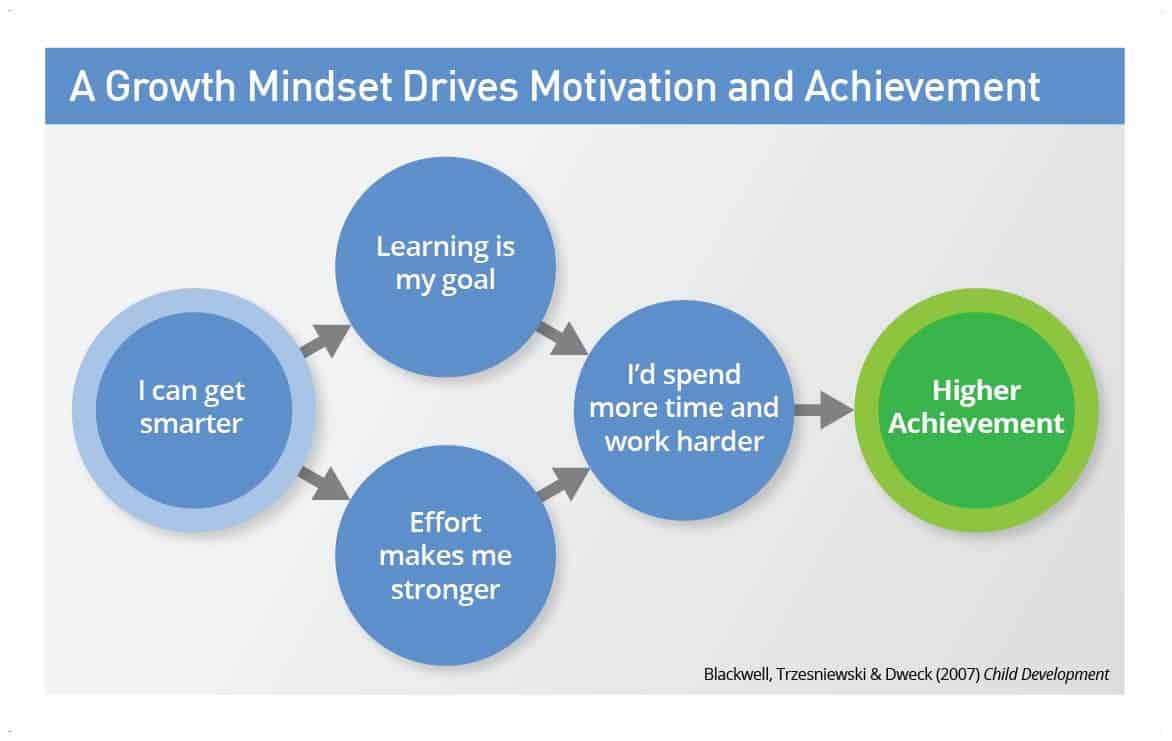
Helping your child develop a growth mindset is also helpful to your child in their development of grit. Dr. Dweck, author of Growth Mindset and researcher at Stanford, developed a theory of fixed versus growth mindset.
Basically, what it means is that if you have a fixed mindset, you will fear failure and easily give up. Someone with a growth mindset believes that their talents, skills, and abilities can be improved with hard work and learning. Parents and caregivers can help with the development of a growth mindset.
Some of the ways that a growth mindset can be developed include:
  • Teaching your child how the brain works: neuron connections, right brain versus left brain.
  • Teach them to set goals.
  • Teach them to have a “can do” attitude.
  • Teach them to develop a strategy when they want to achieve something.
  • Teach them that mistakes are an opportunity to learn.
  • Teach them that failure is a normal part of life.
  • Teach them about self talk: Self Talk Determines Your Success

19 Golden Pieces of Relationship Advice From the Experts

Have you ever noticed that when you are having relationship problems, all of a sudden everyone around you is a relationship expert? Friends, family members, work colleagues – the stream of well-intentioned relationship advice seems to come at you from every angle. And most of the time the conflicting advice you receive can leave you feeling more confused than before you brought it up with any of them.
With all the different sources of information we have access to now, seeking advice can get overwhelming. So to make what can be a complicated area of life simpler, we have gathered the best pieces of relationship advice from around the world, and put them all in one place.

1. It’s Not Your Partner’s Responsibility To Make You Happy

How often have you heard people in relationships say “he just makes me feel so bad about myself” or “she makes me so angry”?
The truth is, nobody can make you feel anything.
It is up to you to accept responsibility for how you feel. This is an important part in owning your personal power. Amy Morin, licensed clinical social worker, psychotherapist and author explains that nearly everybody has given someone else power over the way they feel, think or behave at some stage in their lives.[1]
She goes on to explain that one of the most effective ways to retain your personal power is to accept responsibility for how you feel.
“Don’t let other people’s behavior dictate your emotions (and) instead, accept that it is up to you to manage your emotions, regardless of how others behave.”
Not only are you giving away your own personal power when you outsource your happiness, you are also setting expectations of your partner that are unrealistic, and that will put a lot of unnecessary pressure on your relationship.
Now repeat after me:
“I am in control of my own happiness” and “My partner is in control of their own happiness.”

2. Effective Communication Is Not Just About What You Say

The most common issue couples have is miscommunication. With this comes frustration and disconnection resulting in a lack of intimacy and trust.
Tony Robbins explains that often people mistake communication for speaking or making small talk which is the underlying cause for unsuccessful communication in relationships. [2]
Robbins continues that everyone has different ways they give and receive information:
“Communication in relationships, at its core, is about connecting and using your verbal, written and physical skills to fulfil your partner’s needs – not just making small talk. Some people like to talk, some prefer touch and others are more visual or respond better to gift giving than an outward discussion of feelings. You probably know which communication style you prefer, but what about your partner’s?”
Effective communication in relationships is not only about being aware of how we send out information, but also how we receive it. Scenarios such as one partner thinking everything is fine and the other thinking “he/ she never listens to me” are all too familiar.
Active listening is integral in the communication process, this involves being fully present to your partner. Put down your phone. Turn off the TV. Get closer to your partner when they want to speak with you (no yelling to each other from another room).
Give your partner your full attention so they know they are your number one priority and that what they are saying matters. Also, clarify that you have heard them properly, and that you understand what they have said by repeating back what you have heard in your own words.

3. Identify Your Love Language

Not only do we all communicate in different ways, we all experience love in different ways. One person’s way of giving and receiving love can be completely different to their partner’s. Because we usually give love the same way we receive it (because that’s our love language), often we are not giving love in a way our partner likes to receive love / feel loved.
Dr. Gary Chapman, speaker, counselor and author of The 5 Love Languages® series explains that we all experience love differently, and without understanding these differences, it’s easy to get it wrong when showing that you care.
Dr. Chapman calls the different ways of expressing and receiving love the “5 Love Languages.” They are Words of Affirmation, Acts of Service, Receiving Gifts, Quality Time, and Physical Touch.
His books and his free online The 5 Love Languages® quiz helps couples to understand each other. Each individual has at least one language that they prefer above the other. And once you and your partner know what each other’s love language is, it takes the guesswork out of how to give and receive love in meaningful ways.

4. R.E.S.P.E.C.T.

Underpinning everything we’ve covered so far is one of the most important elements of any successful, healthy, long-term relationship — Respect.
The couple that holds the world record for the longest marriage, Zelmyra and Herbert Fisher (86 years) said the best piece of marriage advice they ever received was “Respect, support, and communicate with each other. Be faithful, honest, and true.”[3]
On the website loveisrespect.org, respect is explained in a thorough, easy to understand way:[4]
“In a healthy relationship, partners are equals, which means that neither partner has “authority” over the other. Each partner is free to live their own life, which can include deciding to share some aspects of their life with their partner. Respect also means that, while we may not always agree with our partner/s, we choose to trust them and put faith in their judgement.”
You may be wondering “what is the best way to show respect in a healthy relationship?” Loveisrespect.org clarifies that respect is not a one-off act or word, it is shown in how you treat one another on a daily basis, even in times of disagreement or conflict. “Fighting fair” is part of showing respect in relationships – being able to value and respect your partner’s feelings and opinions, even if they are different to yours.
Respect is NOT about controlling another person (aka your partner) or making them do what you want them to do. It’s about accepting and loving the other person and allowing them to express who they are and having the freedom to be themselves.

5. Have Clear Boundaries

Setting and sticking to clear boundaries can be the difference between a healthy, happy relationship and a toxic, dysfunctional relationship.
Loveisrespect.org exlplains that discussing your boundaries with your partner is an essential way to ensure that both parties’ needs are being met and that you each feel safe in your relationship. [5]
Some boundaries to consider are how much time you spend apart, when you will be physically intimate, who you will talk to about your relationship, what details of the relationship you are comfortable sharing.

6. Know Your Values

Tony Robbins explains the importance of values in his book Awaken The Giant Within:
“To value something means to place importance on it. All decision-making comes down to values clarification.”
Values bring energy and direction; they’re at the heart of what makes an individual tick. When you know what’s most important to you, making a decision is quite simple – individually, and as a couple.
So to start the process of working out your values, Robbins suggests answering one simple question “What’s most important to me in life?” then brainstorm the answers. Once you have a list of answers, arrange them in order from most important to least important (these are your “moving-towards values”).
The flip-side of the exercise is making a list of what Robbins calls “moving-away from values”. These are the things you actively avoid in life. Arrange these in order too. Seeing these will help you get clarity over your avoiding behaviours, and have greater clarity in your decision making.
Robbins’ next step is a big one, something most people may not have done before. Now ask yourself “What type of person do I need to be in order to achieve all that I want in life? In order to be that person, what would my values need to be? What values do I need to add / eliminate?”
Think about all areas of your life when you answer these values questions, paying special attention to your relationship. What sort of person do you need to be in order to have the relationship you want?

7. Let Go of the Small Stuff

After the honeymoon period is over in a relationship, it can become easy for couples to slip into “the comfort zone”. In this comfort zone are things like laziness, lack of effort and nit-picking over things that you may not have even noticed in the blissful getting to know each other stage.
In their book “Don’t Sweat The Small Stuff – in Love“, Dr. Richard Carlson and his wife Kristine Carlson explain how couples can avoid letting the little everyday irritations in life get to them, and how to appreciate each other. Their top tips include:
  • Let It Go Already – in summary, make the decision to forgive, forget and move on.
  • Throw Away Your Scorecard – don’t keep score of what you do and what your partner isn’t doing.
  • Allow Your Partner To Be Human – remember that you are in a relationship with a fellow human who is doing the best they can.
  • Learn To Laugh At Yourself – learn to laugh at yourself and diffuse potential arguments with the power of humour.

8. If You Can’t Avoid the Fight, Fight Fair

No relationship is perfect, and part of any healthy relationship is the ability to have discussions and air concerns with your partner to avoid “bottling things up” and potentially having outbursts about unrelated issues later on.
Another gold nugget from “Don’t Sweat The Small Stuff – in Love” is ‘Don’t Fight Unless The Mood Is Right‘. When someone is angry, you are not going to be speaking to the person, you will be speaking to the mood. Giving each other space when one of you (or both of you) are in a bad mood, and coming back to discuss your concerns when feeling more level-headed is a more rational way to deal with disagreements.
The site Love Engineer with relationship experts from around the world has a list of Do’s and Don’ts when fighting (how to fight fair) including:[6]
  • Do not attack or give insults
  • No yelling, throwing, hitting or pushing
  • No blaming, criticizing and / or judging
  • No giving the silent treatment
  • Do take responsibility for what you can change or how you can improve the relationship
  • Ask for what you need in the relationship
  • Work on seeing the other person’s perspective.

9. Parents – Don’t Forget About Your Partner!

Relationships Australia, Inc. has a range of advice sheets to help with different aspects of relationships, with one focus area being Parenting and Relationships. Their sub-topic in this focus area is ‘Don’t forget about your partner’ where they explain the importance of finding time out for yourselves. [7]
If you are overwhelmed by the responsibilities of caring for children, working and all the other items on your to-do list, it’s easy to forget about your partner or start taking them for granted.
Their article suggests to try to find time for just the two of you, even if you are tired or “too busy.”
Which brings us to the next important piece of advice…

10. Make Time for Date Night

Drs. John and Julie Gottman of The Gottman Institute advise that date nights make relationships. And in case you’re wondering what a date night (or morning or afternoon) is, they explain this as a pre-planned time where the two of you take a break from your duties in and out of the home and spend time focusing on each other. The goal of this time together is to really talk and listen to each other, to reconnect on a deeper level. [8]
The Gottmans go on to list the most common date night obstacles, and how to overcome them:
TIME – Scheduling / blocking out time in your calendar and showing up no matter what.
MONEY – Dates don’t have to cost a thing. Going for a walk along the coast or in the bush, sitting in a park watching the world go by, or taking a trip down memory lane going through old photos – you are only limited by your imagination!
CHILDCARE – “Trade childcare with other couples (in your friends group). If that’s not possible, see if a trusted family member or close friend will help you in your quest to spend sacred time together. Look for inexpensive babysitters in your neighborhood, or ask friends for recommendations.” suggest the Gottmans.

11. Don’t Neglect the Importance Of Intimacy

Intimacy is something not always discussed openly, a topic often linked to sex can sometimes even be seen as a taboo subject. However, intimacy is much more than just physical intimacy.
Relationships Australia defines intimacy as:[9]
“Intimacy is about loving trust and support; accepting and sharing in your partner’s feelings, being there when they want to let their defences down and knowing that your partner will be there for you.”
According to Brené Brown, an expert on social connection, the key to unlocking intimacy is the ability to be vulnerable. Brown says that if you want to have deeper relationships, you have to remove your “armor” (the protective layer that a lot of us aren’t even aware we are wearing), no matter how vulnerable it makes you. [10]
An article in Psychology Today titled “The Real Secret To Intimacy (and Why It Scares Us)” also explores this connection between vulnerability and intimacy, explaining that knowing you are seen for who you are and loved all the same, and to give that to your partner may just be one of life’s most fulfilling experiences. [11]
This deeper connection, being able to be truly seen and loved for who you are, and being able to express all of you translates across physical intimacy, emotional intimacy, spiritual intimacy and intellectual intimacy.

12. Leave a Toxic Relationship

So far, we’ve covered advice relating to staying in a healthy, loving relationship. But sometimes relationships just aren’t made to last – toxic relationships. (If you are unsure about whether you are in a toxic relationship you may want to check out this article: 8 Signs of a Toxic Relationship)
Ending any relationship is not a pleasant process, however ending a toxic relationship has a whole new level of complexities and things to be aware of. You will need to be mentally, physically, emotionally and financially prepared to end it otherwise (as most research will show) you will continue to go back to the toxic environment.
However, according to Power of Positivity,[12] there are many ways to get out of a toxic relationship peacefully. We have listed the top 3 below:
  • Surround yourself with positive social support
  • Identify and express your emotional states
  • Find a lesson in the distress

13. Long-Distance Relationships Can Work

With so many people meeting online as well as a lot of people working away from their partner or family, it’s no wonder this is one of the most searched relationship topics. The old saying goes “absence makes the heart grow fonder”, and in the case of a long-distance relationship, never a truer word has been spoken.
Having a strong support network around you is important. The video below offers some helpful advice including communicating regularly and creatively, making plans together and having a goal (end date) for the long-distance element of the relationship in mind.
Let’s take a look at the video:

14. Maintain Your Sense of Self

If your entire world revolves around your relationship and you become all about the other person, chances are you are not taking time to nurture hobbies, friendships or taking care of yourself. Maintaining your sense of self in a relationship is critical, after all, your partner fell in love with you and everything that makes you unique.
Sharon Martin, licensed psychotherapist and co-dependency expert, explains that there are many ways you can maintain your sense of self in relationships including:[13]
“Knowing what you like and what matters to you; Asking for what you want, rather than always deferring to his/her wants; Not keeping yourself “small” or hidden to please others; (and) Staying true to your values”

15. Keep the Spark Alive

The main difference between a romantic relationship and a friendship is the physical intimate connection. The ability to maintain this aspect of the relationship can either make or break couples.
In an article published in Self, several couple’s therapists explain ways to keep the spark alive in a long-term relationship.[14]
From making a game out of it, to checking in with each other every day, all the way through to downloading apps designed to help reignite the flame in the bedroom, the opportunities to keep the embers of love burning are only limited by your imagination.

16. Regain Broken Trust

Dr. Magdalena Battles says it best that:
“Trust is the rock upon which all relationships exist. If that rock is chipped away by deceit, over time the foundation crumbles.”
She continues explaining that when something more serious happens such as infidelity in a marriage, and therefore the foundation that the relationship is built on, are broken in an instant. According to Dr. Battles, it’s not easy to rebuild trust, but it is possible.
She suggests the COME FORTH method to overcome broken trust in a relationship.
For the offender:
  • C: Come clean
  • O: Open yourself emotionally
  • M: Make meaningful conversations
  • E: Engage in full transparency
And for the person who has had their trust betrayed:
  • F: Forgive
  • O: Open conversations
  • R: Request what you need to get back to a healthy relationship
  • T: Talk about the betrayal to a confidant or professional
  • H: Heal yourself to heal the relationship

17. Be Supportive in Stressful Times

We all know how easy it is to show our support when things are going well, but what about when things aren’t going quite so smoothly?
Robbins Research International has published just how important being supportive of our partner during stressful times really is:[15]
“When we routinely provide our partners with the emotional support they need, we can create a new depth of love in the relationship. Because as ironic as it may seem, when stress makes your partner more ornery, argumentative, or distant, that is when he or she needs you to show up the most.”

18. Be Patient (And Realistic)

Patience is an important element in a healthy relationship, especially in the initial stages when old habits and baggage need to be ironed out or let go.
While patience is a virtue, it’s also essential to be realistic. If your needs are not being met or your partner isn’t honouring their promises to you, it may be time to reassess whether the relationship is right for you.
Monica Parikh, attorney, writer and dating coach, points out that we need to look at our partner’s actions – do they match their words? Has your partner committed to counseling or made a commitment to change? Or are they simply saying what they think you want to hear to get you off their back?[16]
“You have only one life to live. Don’t waste it on a promise and a dream, especially absent a real commitment” — Parikh

19. Love and Fear Go Hand in Hand

Sheryl Paul, M.A., shares insight into her time as a love coach:[17]
“Love is the biggest risk we take. When we love, we open our hearts, our minds, our bodies, and our souls to another, and as such, nothing renders us more vulnerable to being hurt and to experiencing loss.”
Paul continues by explaining that fear isn’t always obvious and can show up as doubt, irritation, numbness or apathy towards your partner or your relationship. She says that when these feelings surface, it doesn’t necessarily mean that you’re in the wrong relationship; that it’s more likely you are in the right relationship and on a subconscious level, you are protecting yourself from getting hurt as you share love with your partner.

Final Thoughts

Being in a relationship can be the most challenging, and the most rewarding time of your life.
We have covered a lot of advice topics under the umbrella of relationships to help with the most common questions asked. By following this advice, turning towards your relationship and giving it the full attention it deserves, you will be pleasantly surprised with how deep your connection with your partner can truly be, and how fulfilled you will feel.